


Articles
This page features articles created by the four partners that are part of the project. The articles explore “forgotten fish” — species that are often overlooked — and explain why they matter, how they can be used, and how they can contribute to more sustainable seafood consumption.
click the photos to read the article.
The Weekly Menu That Changes Everything
Every week, Ida and Camilla - the two young women who founded and run Marstang - rebuild their three-course menu from scratch, based entirely on what their local producers, farmers, and fishermen are able to deliver that week.
click photo to read the article

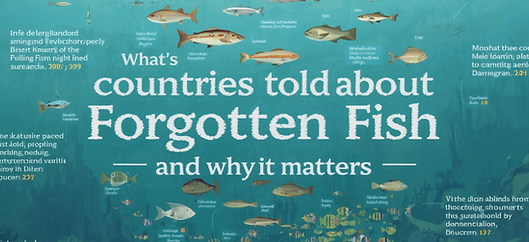
What Three Countries Told Us About Forgotten Fish - And Why It Matters
Something significant has just quietly happened in the Forgotten Fish project. We have data.
click photo to read the article
Eating Well Together: How Food Literacy Connects to Health Literacy
This is one of the reasons why the Nordic Wellbeing Academy is a committed partner in the Forgotten Fish project. On the surface, Forgotten Fish is about underutilised marine species - the small, fast-reproducing fish that get caught in artisanal nets across European coastal waters, only to be discarded because industrial systems have decided they are not worth trading.
click photo to read the article

Island Logic: Why Ærø Is the Perfect Laboratory for Sustainable Seafood
Ærø is a small island in the South Funen Archipelago, a constellation of Danish islands where the sea has always shaped daily life. Marstal, the town where Marstang Mad & Vin is located, has a history rooted in maritime trade and fishing that stretches back centuries. The fishermen who still work these waters know species that have never appeared in a supermarket.
click photo to read the article

The Wellbeing Economy and the Fish on Your Plate
The sea does not need to be exploited to be valued. It needs to be
understood, respected, and given a place in the choices we make as a society.
click photo to read the article

Two Young Women, One Restaurant, and a Food Philosophy Europe Needs
The summer of 2021 was supposed to be temporary. Ida, from Copenhagen. Camilla, from Norway. Both arriving on Ærø for a single season, for different reasons, with no particular plan to stay. But the island had other ideas.
click photo to read the article

Building European Bridges: What the Forgotten Fish Project Looks Like from Denmark
For the Nordic Wellbeing Academy, cross-border collaboration is not a formality. It is the method.
click photo to read the article

Fresh Catch, Local Table: Inside Marstang's Relationship with Ærø's Fishermen
This is not a romantic story about the good old days. It is a practical description of how Marstang has operated - and it is made possible by a set of direct relationships between the restaurant and the island's fishing community that took time and genuine commitment to build.
click photo to read the article
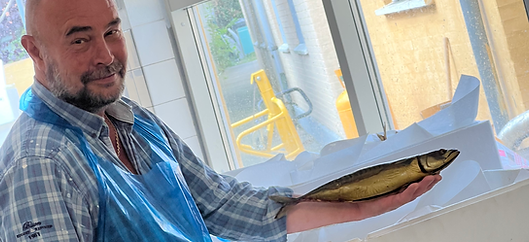
Organic, Seasonal, Local — and Forgotten
Forgotten fish arrive not as a deliberate programme, but as a natural consequence of buying locally and honestly. The fish tends to speak for itself.
click photo to read the article

Resilience and Responsible Eating: A New Framework for Catering Professionals
Coastal communities across Europe are under extraordinary pressure. Climate change is altering the distribution and availability of marine species.
click photo to read the article
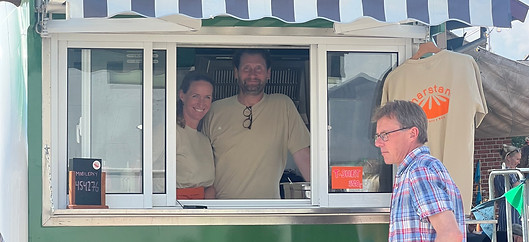
Trust, Transformation, and the Sea: Why Changing Food
Habits Requires Systemic Change
The gap between intention and behaviour is one of the
most studied - and most persistent - challenges in public health and sustainability research. It is also, we would argue, one of the most misunderstood.
click photo to read the article

What a Three-Course Forgotten Fish Menu Actually Tastes Like
There is a moment, somewhere between the first bite of a dish you have never tasted before and the realisation that it is extraordinary, when a forgotten fish stops being a sustainability concept and becomes simply dinner. A very good dinner.
click photo to read the article

Social Responsibility on the Menu: How Hospitality
Professionals Can Contribute to Marine Biodiversity
A restaurant that sources forgotten fish from local artisanal fishers is not just making a procurement decision. It is performing an act of social responsibility.
click photo to read the article
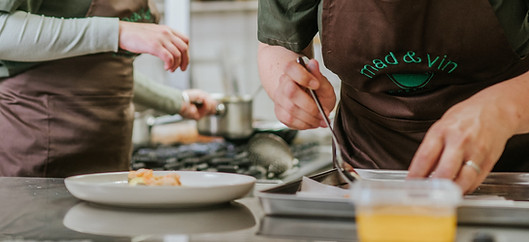
Pescaturismo and the valorisation of Forgotten Fish
Pescaturismo, a form of tourism rooted in traditional fishing practices, has emerged as a model that connects local communities, marine ecosystems, and visitors through direct, experience-based engagement.
click photo to read the article

Structuring Choice and Profitability in Food Service
Menu engineering is a systematic approach to analysing and designing restaurant menus in order to influence customer choices and optimise financial performance.
click photo to read the article

No More: Europe's Most Undervalued Catch - Two Days of Forgotten Fish at Conference in Tallinn
A conference on predators and invasive species, co-hosted by the Estonian Ministry of Regional Affairs and Agriculture - Forgotten Fish project invited by Eurofish
click photo to read the article

Salted anchovies, tradition, and masculina da magghia
Salted anchovies represent one of the oldest methods of fish preservation in the Mediterranean, rooted in both necessity and cultural continuity.
click photo to read the article

“Sarde in saor”, a venetian classic
Sarde in saor is one of the most well-known dishes of Venetian cuisine. It is described as a simple fish preparation based on “poor” ingredients such as sardines, onions, and vinegar, where the term “saor” means “flavour” in Venetian dialect.
click photo to read the article

Forgotten Fish project in Eurofish Magazine
When a project like Forgotten Fish sets out to change the way Europe thinks about its seas, its fishing communities, and its food, one of the most encouraging signs of progress is when people outside the project start telling the story themselves.
click photo to read the article

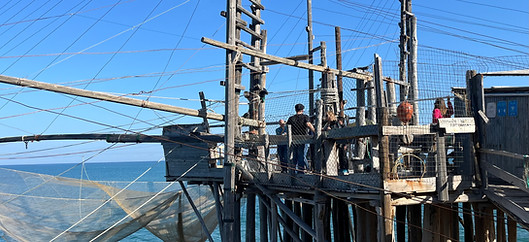
Traditional fishing in Italy
Italian traditional fishing is strongly shaped by geography. Along the Adriatic coast, shallow waters favoured fixed structures and shore-based systems, while the rocky Tyrrhenian coastline led to boat-based and trap fishing.
click photo to read the article
The use of forgotten fish in haute cuisine
Historically, global seafood consumption has concentrated on a limited number of species, while many others have been underused or diverted to non-food uses such as fishmeal.
click photo to read the article

Owned by Those Who Fish: How Thorupstrand's Cooperative Saved a Way of Life
On a long, flat stretch of North Jutland coastline, where there is no harbour and the boats must be hauled directly onto the beach through the surf, something quietly remarkable has been built.
click photo to read the article

Fishing Methods and Types of Nets in Dalmatia
Traditional fishing along the Dalmatian coast is grounded in knowledge accumulated over generations. This knowledge is practical, experience-based, and closely tied to the behaviour of different fish species and the characteristics of the marine environment.
click photo to read the article

A Dalmatian Gajeta, Between Function and Heritage
Fishing in Dalmatia has consistently been described as more than an occupation, it is a practice embedded in family tradition and coastal identity.
click photo to read the article

The Fishermen of Thorupstrand: Portraits from the Edge of the Sea
On the beach at Thorupstrand, on the exposed North Sea coast of Jutland, fishing is not a lifestyle choice or a heritage tourism attraction.
click photo to read the article
